
AVIALINKERAircraft Market Intelligence
Professional, maintenance-adjusted CMV appraisal for your Airbus A220-100 or A220-300 in under 60 seconds. Relatively young fleet with PW1500G engine exposure. A growing secondary market with strong fundamentals. Q2 2026 calibration.
FREE indicative CMV — no registration required • Full reports from EUR 57
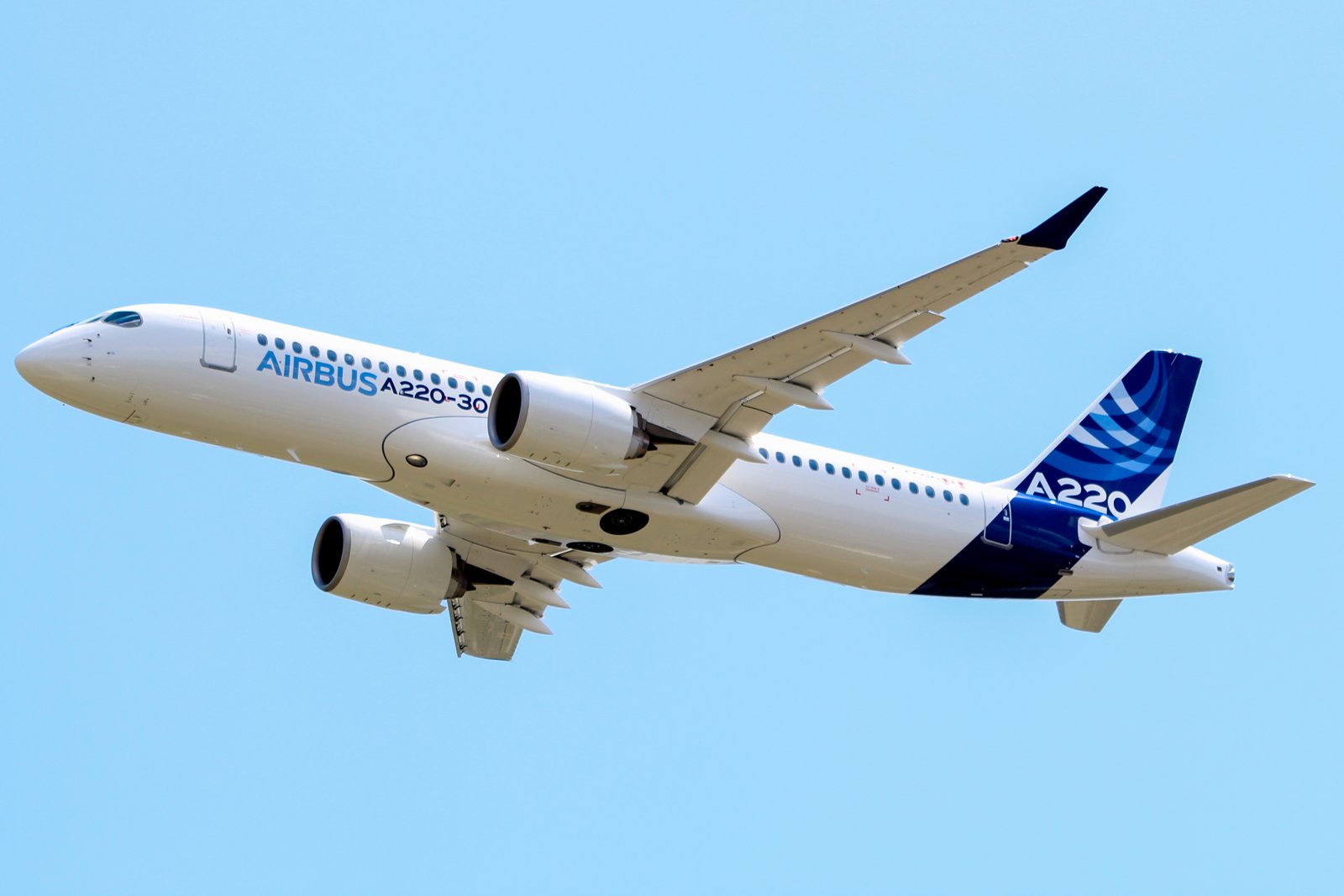 Photo: Airbus SAS / Wikimedia Commons
The Airbus A220 family (formerly Bombardier C Series) is the defining platform for the 100-150 seat regional and thin-route segment, directly competing with A319neo and B737-7 MAX for network and leisure operators. The fleet is relatively young — most deliveries from 2016 onwards — which means secondary market transactions are currently concentrated in early-delivery units. The A220-300 variant has emerged as the dominant commercial platform; the A220-100 addresses a smaller, more specialised operator pool. PW1500G engine management and GTF-related operational reliability are the primary technical and valuation risk factors.
The A220 secondary market is emerging rather than mature. Bid-ask spreads are wider than established types due to limited comparable transaction data. Seller asking prices typically run 15-28% above CMV midpoint. The ANALYSIS report provides a realistic transaction range calibrated to current comparable evidence and a negotiating brief for buyer or seller.
The A220 is a single-engine-type programme (PW1500G). Engine management, GTF reliability track record and fleet maturity are the primary risk and value factors.
The GTF-powered A220 uses the PW1500G variant, sharing technology with the A320neo GTF programme. Engine shop visit cost, interval and MRO capacity are the primary valuation risk factors. Units approaching first major shop visit carry a specific cost exposure that must be priced into any transaction.
PW1500G fleet experience to date has been broadly positive relative to the PW1100G (A320neo variant), but GTF technology-family risks apply. Units with specific engine serial numbers in FRACA programmes or subject to service bulletins require serial-number level assessment before CMV conclusions.
The A220-300 commands a premium over the A220-100 due to higher capacity, broader operator applicability and stronger demand pipeline. The A220-100 serves a more selective market — thin-route operators, replacing ageing 100-seat jets — which compresses achievable values and extends marketing periods.
The A220 fleet is young relative to established narrowbody types. Limited secondary market transaction comparables means CMV ranges carry wider confidence intervals than for A320 or B737NG. Avialinker calibrates against available transaction evidence plus productivity and depreciation benchmarking.
A220 values are higher in markets where operators have established maintenance agreements, simulator access and crew training infrastructure. Standalone operator acquisition without existing A220 infrastructure adds cost, which depresses achievable bid prices.
Higher MTOW, extended range variants and operator-specific interior configurations affect leaseback attractiveness. Standard configurations aligned with the broader commercial operator pool maximise secondary market demand.
All reports generated in under 60 seconds and delivered by email as a PDF.